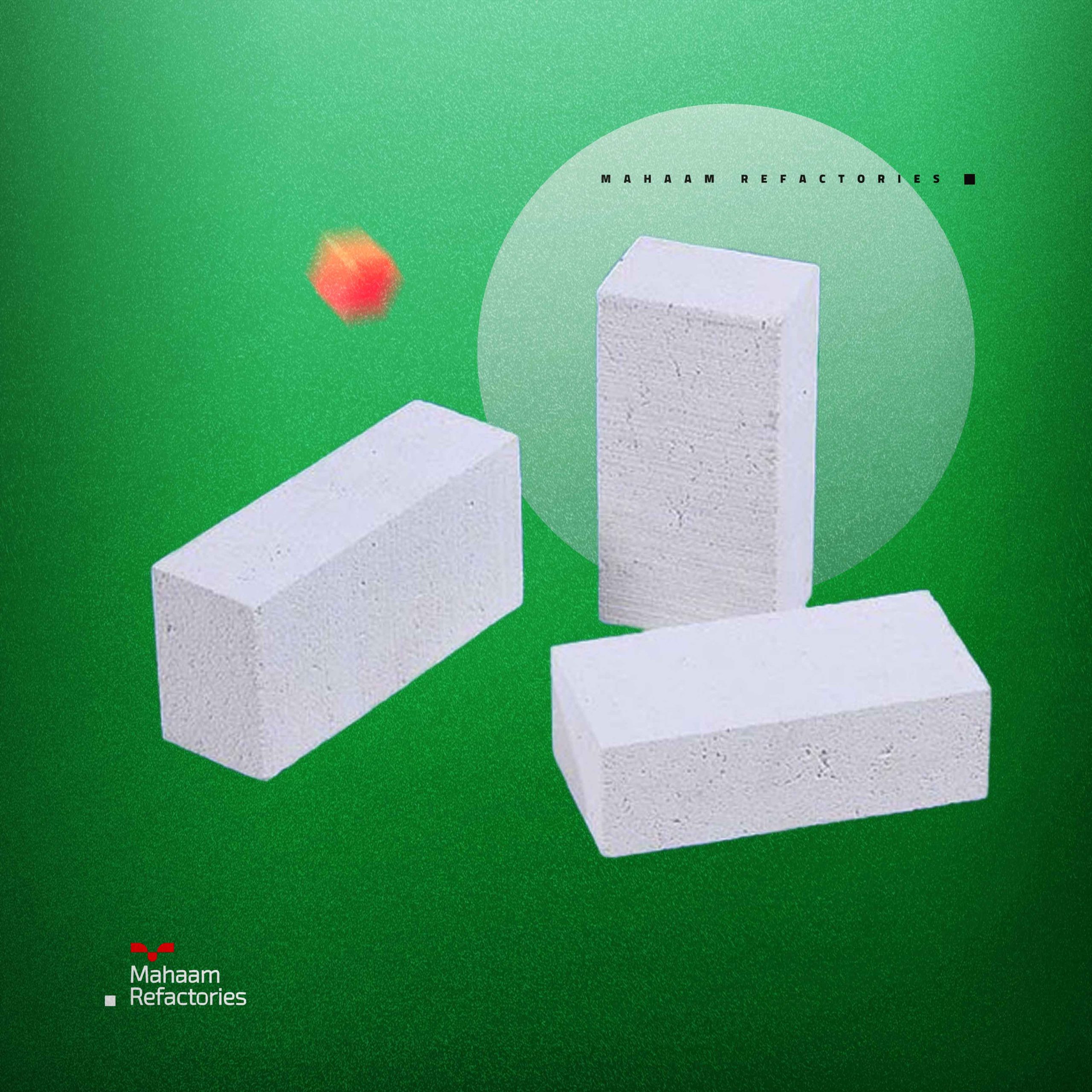
Low Porosity, High Performance: Perfect for High-Heat Environments!
Mullite and alumina-based pressed refractories are advanced materials designed for high-temperature industrial applications, offering exceptional thermal stability, mechanical strength, and resistance to thermal shock. These refractories primarily consist of alumina (Al2O3), ranging from 70% to 99.4%, with mullite (Al6Si2O13) forming an integral part of their structure, especially in higher-grade formulations. The precise composition of these materials makes them ideal for use in environments subject to extreme temperatures, such as kilns, furnaces, and glass manufacturing processes.
As the alumina content increases, these refractories exhibit improved properties, including higher bulk density, enhanced cold crushing strength, and better refractoriness under load (R.U.L.). These qualities make them capable of withstanding prolonged exposure to high temperatures without degrading. The iron oxide (Fe2O3) and silicon dioxide (SiO2) levels decrease with higher alumina, enhancing their purity and resistance to high temperatures. Additionally, the low levels of iron oxide (Fe2O3) and silicon dioxide (SiO2) present in these refractories reduce the risk of chemical reactions that could weaken their structure under stress.
Additionally, Bulk density (B.D.) increases from 2.60 to 3.10 gm/cc, reflecting stronger, more compact materials. The cold crushing strength (C.C.S.) ranges from 500 to 900 kg/cm², indicating greater mechanical durability as alumina content rises. Refractoriness under load (R.U.L.) is consistently high at 1700°C for samples with 78% alumina and above, ensuring the material can withstand extreme conditions. Thermal conductivity (T.C.) improves slightly with increasing alumina, from 1.98 to 2.22 w/m°K, which contributes to better heat resistance.
They are also known for their excellent thermal conductivity, which improves with higher alumina content, helping to manage heat distribution effectively. The refractories’ consistent apparent porosity ensures a balance between mechanical strength and thermal shock resistance. These materials are widely used in industries such as glass, steel, cement, and ceramics, particularly for lining furnace walls, regenerators, and other high-heat zones, furnace walls, roof linings, regenerators, forehearths, feeders, checkers, burner blocks, glass melting furnace floors, refining zones, and spouts/taps. These areas require high thermal stability, wear resistance, and durability to withstand extreme temperatures and abrasive conditions in glass production.